امامت در پرتو قرآن و سنت

امامت در پرتو قرآن و سنت

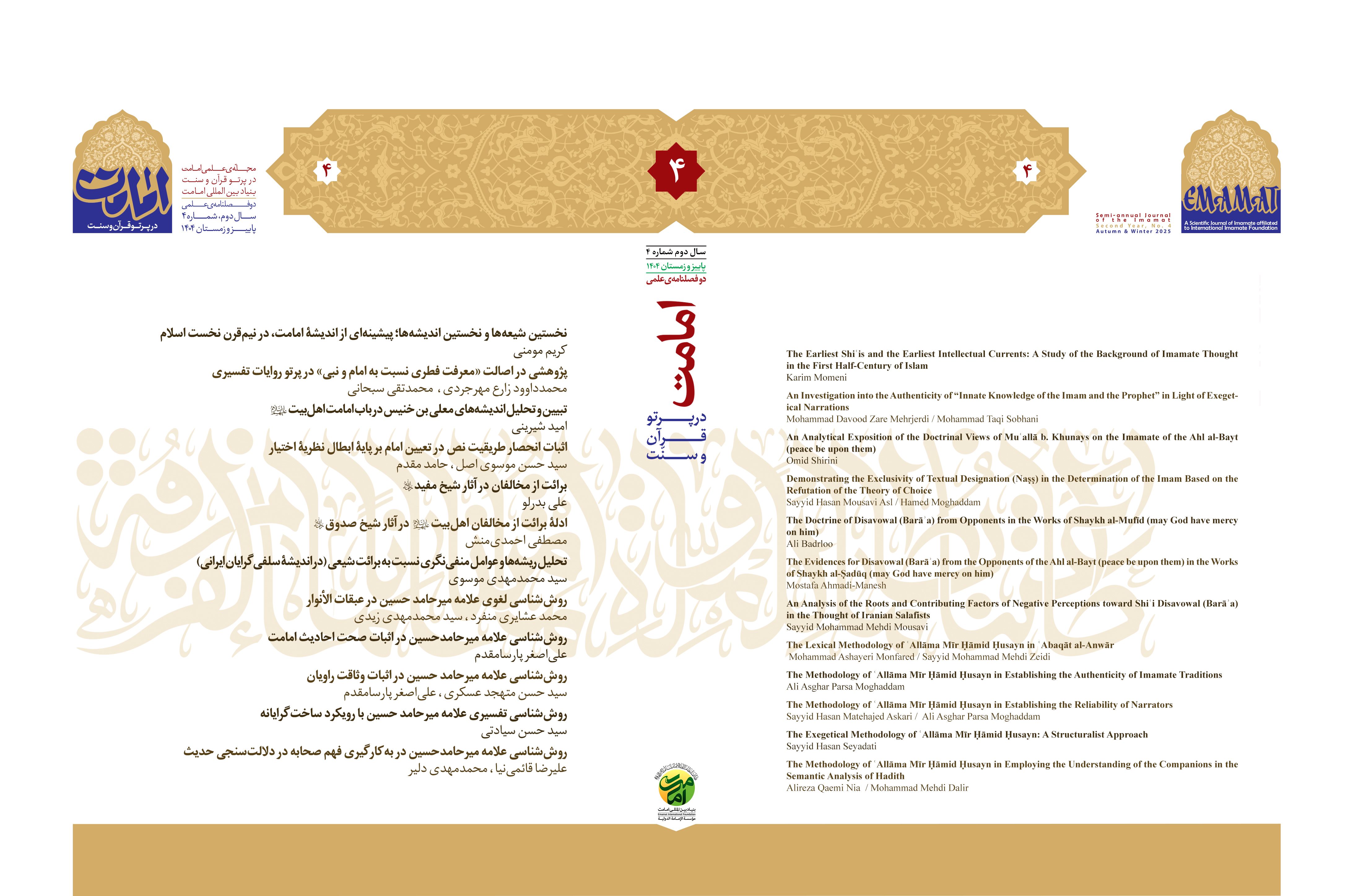
روش‌شناسی لغوی علامه میرحامد حسین در عبقات الأنوار

نوع مقاله : مقاله پژوهشی

نویسندگان
1 دانشیار مجتمع زبان، ادبیات و فرهنگ‌شناسی جامعةالمصطفی العالمیة.
2 سطح ۴ ادبیات عرب، جامعةالمصطفی العالمیة
10.22034/emamah.2026.560558.1093
چکیده
یکی از تألیف‌ها که با هدف پاسخ به کتاب تحفة اثناعشریة، اثر شاه عبدالعزیز دهلوی در قرن دوازدهم تألیف شد، عبقات الأنوار است. این کتاب، نوشتۀ علامه میرحامد حسین هندی است که در چند جلد به شبهات دهلوی در موضوع امامت پاسخ می‌دهد. ازآنجاکه بخشی از شبهات دهلوی به معانی واژگان روایات ارتباط دارد، بخش قابل‌توجهی از پاسخ‌های علامه، به مباحث لغوی و استنباط معانی کلمات مربوط است. ازاین‌رو، پژوهشگر با روش توصیفی-تحلیلی و با هدف تشریح و تبیین روش لغوی علامه، سعی دارد جنبه‌های لغوی به‌کاررفته در عبقات الأنوار را برای علاقه‌مندان بیشتر آشکار سازد. در این پژوهش نشان داده می‌شود علامه در کنار پایبندی به روش تقلیدی و استفاده از داده‌های علمای ادبی در کشف معنای کلمات، از روش‌های اجتهادی نیز برای استنباط معانی واژگان بسیار بهره برده است. مراجعه به معاجم لغوی معتبر و متقدم در حیطۀ روش تقلیدی و استناد به سیاق و قرائن حدیث در حیطۀ روش اجتهادی را می‌توان از مهم‌ترین روش‌های علامه در کشف معانی واژگان نام برد. برایند این دو روش نشان از آن دارد که تحلیل لغوی در عبقات صرفاً گردآوری واژگانی نیست، بلکه فرایند استدلالی و روشمندی است که در خدمت تبیین آموزۀ امامت و نقد مبانی دهلوی قرار می‌گیرد.
کلیدواژه‌ها

عنوان مقاله English

Linguistic Methodology of Allamah Mir Hamid Husayn in Abaqat al-Anwar

نویسندگان English

Mohammad Ashayeri monfared 1
syed mohammad mehdi zaidi 2
1 Associate Professor, Faculty of Language, Literature and Cultural Studies, Al-Mustafa International University
2 PhD-level graduate in Arabic Language and Literature from Al-Mustafa International University.
چکیده English

One of the works authored with the aim of responding to Tuhfa-yi Ithna Ashariyya, written by Shah 'Abd al-'Aziz Dehlawi in the twelfth century, is Abaqat al-Anwar. This work, authored by Allamah Mir Hamid Husayn al-Hindi, responds in several volumes to Dehlawi’s objections concerning the doctrine of Imamate. Since some of Dehlawi’s objections are related to the meanings of words occurring in traditions, a considerable part of the Allamah’s responses concerns linguistic discussions and the derivation of the meanings of words. Accordingly, using a descriptive-analytical method and with the aim of explaining and clarifying the Allamah’s linguistic methodology, this study seeks to shed greater light on the linguistic dimensions employed in Abaqat al-Anwar for interested researchers. The study demonstrates that, alongside adhering to a traditional method and using the contributions of literary scholars to discover the meanings of words, the Allamah also made extensive use of ijtihadi methods for deriving lexical meanings. Consulting reliable and early lexical dictionaries within the traditional method, and relying on context and hadith indicators within the ijtihadi method, can be identified as among the most important methods employed by the Allamah in determining the meanings of words. The combination of these two approaches demonstrates that linguistic analysis in Abaqat is not merely a collection of lexical data; rather, it is a systematic and argumentative process serving to explain the doctrine of Imamate and critique Dehlawi’s foundations.

کلیدواژه‌ها English

Linguistic Methodology
Mir Hamid Husayn
Abaqat al-Anwar
Imamate