نوع مقاله : مقاله پژوهشی
عنوان مقاله English
نویسنده English
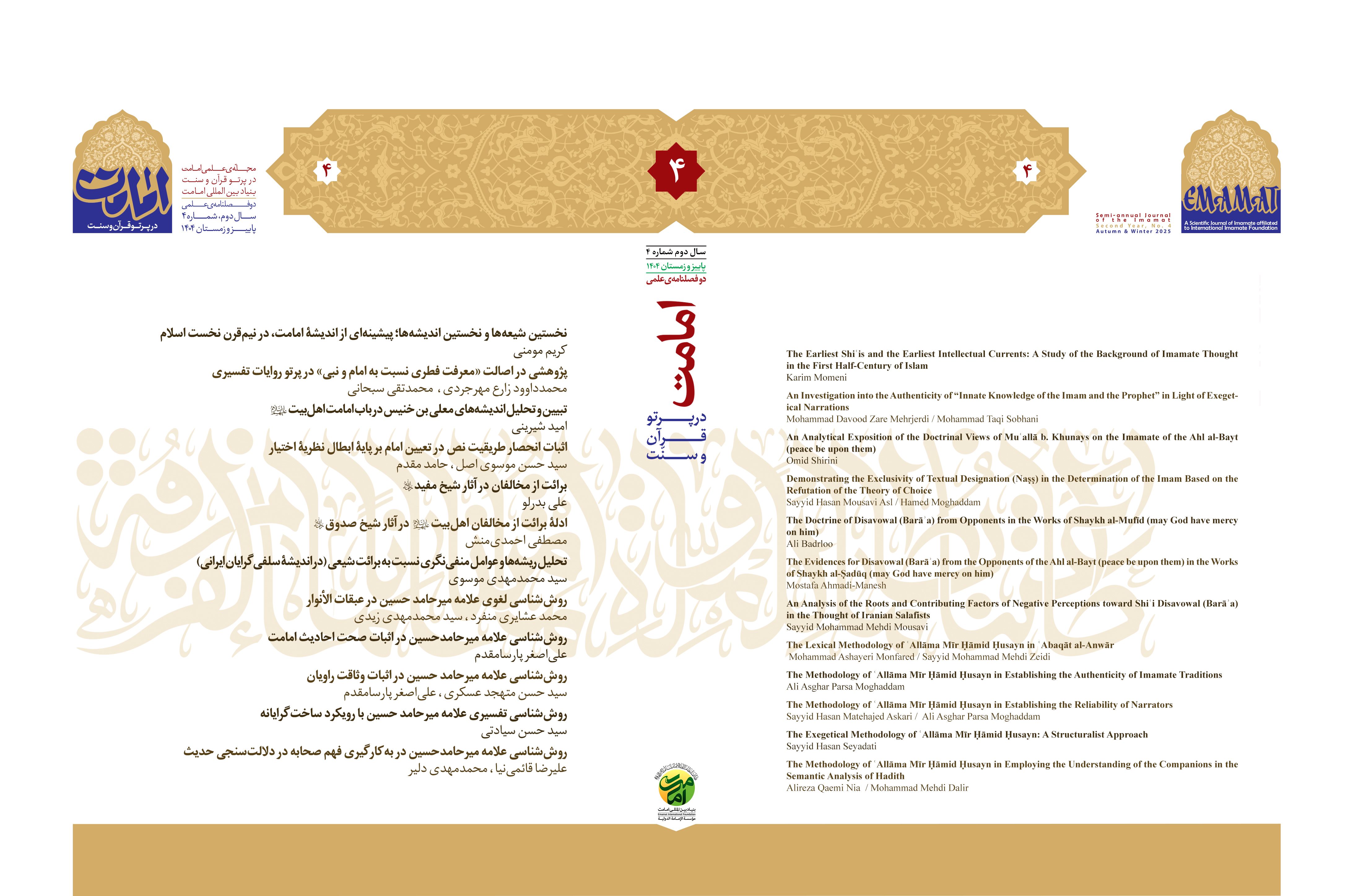
The doctrine of disavowal has always played a fundamental role in defining the doctrinal and practical boundaries of Imami Shiism. In this context, the era of Shaykh al-Mufid was a decisive period due to religious confrontations in the Baghdad school and the necessity of rationally articulating doctrines. Using a descriptive-analytical approach and historical induction across Shaykh al-Mufid’s jurisprudential, theological, hadith, and historical works, this study examines how the doctrine of disavowal was theorized in his writings, taking into account the circumstances requiring religious dissimulation in Baghdad. The findings show that Shaykh al-Mufid accepted disavowal as an established principle within Imami theology, such that despite his serious criticisms of Shaykh al-Saduq on other issues, he was fully aligned with him regarding the obligation of disavowal. An analysis of the keywords used in al-Mufid’s works indicates that he described the opponents of the Imams as infidels, enemies of God, innovators, and hypocrites, and considered them outside the sphere of monotheism. Accordingly, disavowal has concrete manifestations in Shaykh al-Mufid’s thought in jurisprudence, such as the prohibition of marriage to Nasibis and the exclusion of non-Shiites from inheritance, as well as in theology, as a condition for crossing the Sirat and the acceptance of deeds. Moreover, while observing the principle of dissimulation, he did not refrain from presenting rational and explicit arguments for disavowal. By revisiting the debates of earlier theologians and disseminating relevant hadiths, he reproduced this doctrine within the intellectual environment of the Baghdad school. Ultimately, disavowal, according to al-Mufid, served as a means of preserving the boundaries of Imami Shiism against rival currents.
کلیدواژهها English